

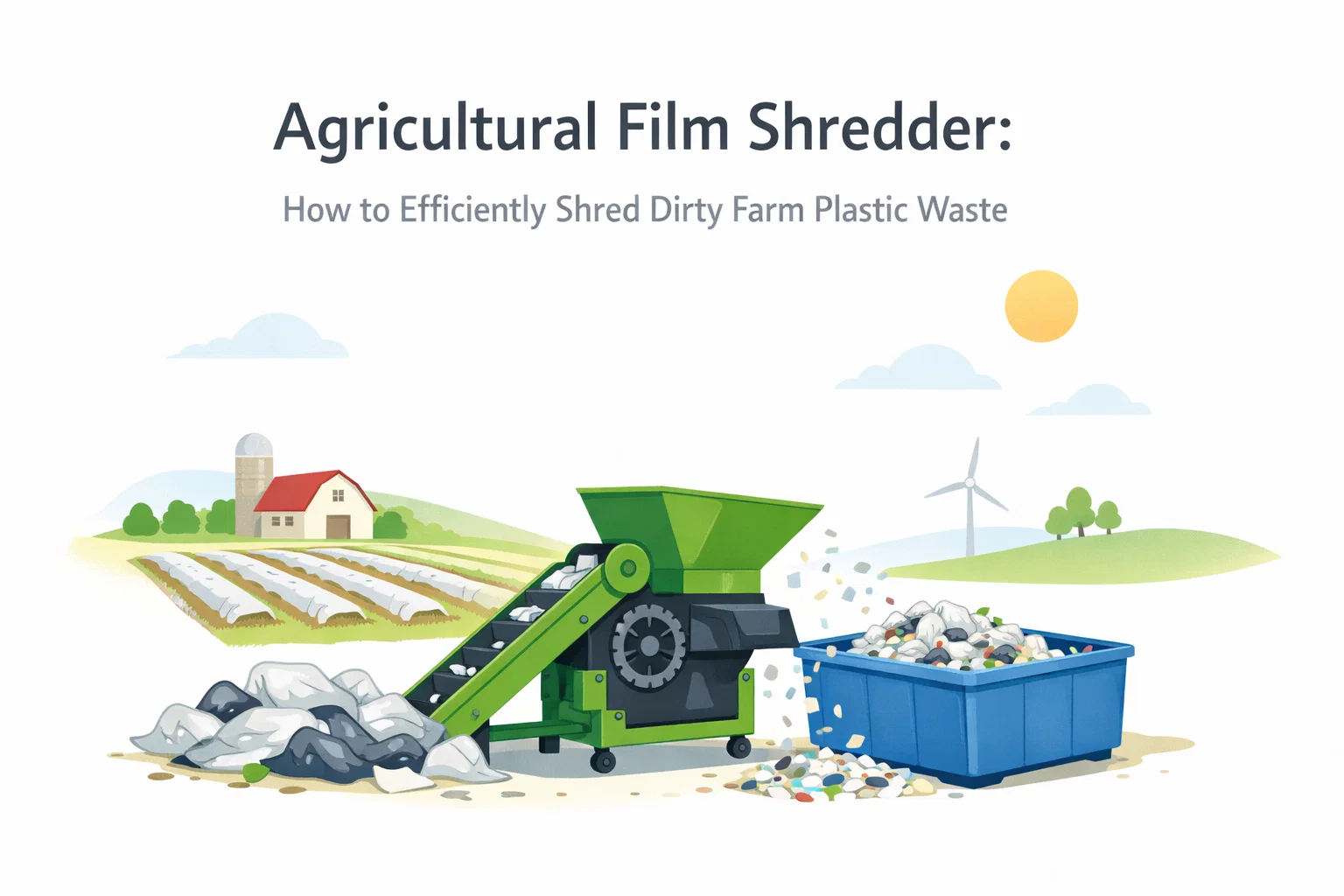
If you run a farm or manage a recycling operation, you know the frustration of facing mountains of used agricultural film at the end of each season. Mulch films, silage wraps, greenhouse covers, and stretch films come off the fields caked in soil, sand, stones, and plant residue. An agricultural film shredder turns that bulky, contaminated mess into uniform flakes you can clean, dry, and turn back into usable plastic pellets.
At Rumtoo, we design and build shredders that handle exactly these tough, dirty materials day in and day out. This guide gives you clear, step-by-step advice so you can process your farm plastic waste efficiently, cut costs, and keep your operation running smoothly. You will learn why shredding matters, how to choose the right machine, and exactly what to do to get reliable results.
The Scale and Challenges of Agricultural Film Waste
Farmers worldwide rely on plastic films to boost yields and protect crops, but the waste adds up fast. Global agricultural plastic use reaches about 12.5 million tons per year, with films making up roughly 60 percent of that total. Mulch films, silage wraps, and greenhouse covers dominate the mix. In the United States, recovered mulch often carries 30 to 80 percent contamination by weight in soil and debris.
That dirt makes everything heavier and harder to handle. Loose film takes up huge trailer space, raises transport bills, and clogs standard equipment. When left in fields or burned, the plastic breaks into microplastics that harm soil structure, water retention, and microbial life. Proper shredding solves the volume issue immediately and prepares the material for effective cleaning.
Why Shredding Is the Essential First Step
Shredding reduces the film to consistent pieces, usually 30 to 80 mm, so downstream washing and drying equipment can work efficiently. Whole sheets tangle and resist cleaning. Flakes expose more surface area for friction washers to scrub away embedded dirt.
The typical flow looks like this: collect and sort from the field, feed into the shredder, transfer flakes to a wash line, dry them, and pelletize. Without a capable shredder upfront, the entire line slows or stops. Machines built specifically for agricultural film manage the stretchiness and grit that would jam ordinary granulators or general-purpose shredders.
Types of Agricultural Film Shredders and How to Choose
Single-shaft shredders with hydraulic ram pushers stand out for this job. The pusher keeps material pressed against a slow-turning rotor fitted with staggered knives. This design delivers steady throughput and resists wrapping. Our single-shaft models for PE/PP film and woven materials reach up to 5,000 kg per hour while producing uniform flakes ready for washing.
Double-shaft shredders use two interlocking rotors to tear large bales or bulky loads apart. They work well as pre-shredders but often pair with a secondary single-shaft unit for finer control.
Specialized thin-film or spiral shredders pull and rip the material with minimal rotor contact to avoid tangles. These suit high-volume stretch-film operations.
When you evaluate machines, focus on these points:
- Throughput that matches your seasonal volume
- Reinforced wear plates and hardened D2 or similar steel knives
- Easy screen and knife access for quick maintenance
- Hydraulic drive for consistent torque on dirty loads
- Automation features such as overload reversal and PLC controls
Test your actual material with the supplier whenever possible. Samples reveal how well the machine handles your specific mix of dirt and moisture.
Explore our specialized single-shaft shredder built for agricultural film and soft plastics.
Step-by-Step Guide to Efficiently Shredding Dirty Farm Plastic
Follow this sequence to achieve consistent results and protect your equipment.
- Collect and Pre-Prepare the Film Remove obvious rocks, metal ties, or large debris at the field edge. Shake or brush off loose soil where practical, but do not aim for spotless material — the wash line will handle the rest. Cut oversized sheets into pieces one person can lift if you feed manually. Bale clean, dry film for easier transport and storage.
- Set Up the Shredder Correctly Place the machine on a solid, level foundation with ample space for infeed and outfeed conveyors. Install the screen size that matches your next process (typically 40–60 mm holes for film). Check all safety guards and emergency stops.
- Feed the Material Steadily Use a conveyor or front-end loader for safety and even flow. Start with a moderate load and increase as you monitor motor current and output quality. Avoid dumping entire bales at once. For very dusty batches, a light water mist at the hopper can reduce airborne particles and begin loosening soil.
- Monitor en Aanpassen Tijdens Bedrijfsvoering Volg de rotor snelheid, hydraulische druk en afvoersnelheid. Als de output trager wordt of opwarmt, verlaag de voedings snelheid of draai de rotor kortstondig om opbouw te verwijderen. Houd de messen scherp — doffe randen verhogen de energieopname en produceren onregelmatige scherven.
- Overdracht en Opslag van Uitvoer Verplaats de scherven onmiddellijk naar het wassysteem via gesloten transportbanden om herbesmetting te voorkomen. Bedek opgeslagen scherven als ze meer dan een dag liggen.
Operators die deze routine volgen, rapporteren constante lopende tijd van meerdere uren met minimale stops. Training van je team op deze gewoonten loont snel uit in hogere dagelijkse output.
Bekijk ons volledige assortiment plastic shredders ontworpen voor eisende recyclingtaken.
Overwinnen van Algemene Shredding Problemen
Verwarren en omslingeren staan bovenaan de frustraties met film. Anti-omslingeren rotor geometrie en juiste messen afstand lossen de meeste gevallen op. Als je nog steeds opbouw ziet, snijd pre-cut bladen langer dan de rotor breedte of voeg een pre-scheur stap toe.
Abrasieve vuil slijt messen sneller dan schoon plastic. Plan inspecties om de 40-80 uur van bedrijfsvoering en wissel of draai messen. Veel operators houden een reserve set bij de hand en scherpen deze buiten de site.
Opgesloten schermen verminderen de capaciteit. Reinig deze dagelijks of installeer een automatisch schermreiniger op grotere machines.
Stof en geluid beïnvloeden de werknemerstevredenheid. Goede ventilatie, stofopvang en geluidsdempende kisten houden het gebied veilig en aangenaam.
Onderhoud dat de levensduur van het apparaat verlengt
Dagelijks: Maak de hopper schoon en controleer op losse bouten. Wekelijks: Inspecteer messen, schermen en slijtplaat. Smeer de lagers. Maandelijks: Service het hydraulische systeem en controleer de motoruitlijning.
Met deze gewoonten verwerken kwalitatieve shredders honderden tonnen vuile film voordat er grote onderhoudsbeurten nodig zijn. De investering in preventief onderhoud levert meerdere malen uit in uptime en lagere reparatiekosten.
Een Volledige Recyclinglijn Opbouwen Rond Uw Shredder
Geknipte scherven bewegen het beste naar een wrijvingswasmachine die wordt schoongemaakt met hoge snelheid schepen, gevolgd door spoeltanks, een ontwateringscentrifuge of pers, en een warmte-luchtdroger. Pelletisatie komt vervolgens — ofwel enkelvoudig voor schoon materiaal of dubbelvoudig voor vuilere ladingen.
Het combineren van de juiste shredder met de downstream apparatuur creëert een soepele, continue stroom. Veel boerderijen en kleine recyclers beginnen met een shredder-wasmachine combinatie en breiden uit als de hoeveelheid groeit.
Echte Voordelen voor Uw Resultaat en het Milieu
Geknipte materialen vervoeren voor een fractie van de oorspronkelijke hoeveelheid, wat de transportkosten drukt. Schoon, gepelletiseerd LDPE wordt voor een vast bedrag verkocht dat vaak de hele operatie binnen één tot twee seizoenen dekt.
Op het milieuvlak houd je plastic uit vuilnisbelt en velden. De Amerikaanse Environmental Protection Agency benadrukt verbeterde inzameling en verwerking van landbouwplastic als essentieel voor het verminderen van vervuiling. Je vermindert ook de opbouw van microplastic die de bodem gezondheid beïnvloedt voor jaren te komen.
Veelgestelde Vragen
Kan ik echt nat of modderig film slijten?
Ja. Robuuste enkele as modellen kunnen hoge vochtigheid en grondinhoud aan. Volg met sterke wrijvingswassing om de rest te verwijderen.
Hoeveel besmetting is acceptabel?
De meeste lijnen tolereren 20-40 procent vuil dat de shredder binnenkomt. Hogere niveaus werken als je sneller messen slijtage en sterker downstream schoonmaak accepteert.
Welke veiligheidsstappen zijn het belangrijkst?
Lockout-tagout voor onderhoud, houd je handen uit de hopper en gebruik transportbanden in plaats van handmatige voeding zoveel mogelijk.
Hoe begin ik als ik maar een paar ton per seizoen heb?
Veel operators delen een mobiele shredder eenheid of werken samen met een lokale recycler totdat de hoeveelheid de aankoop van hun eigen machine rechtvaardigt.
Je hoeft niet te laten dat vuile boerderij plastic afval opstuwen en je tijd en middelen leeg te zuigen. Een goed gekozen landbouwfilm shredder plus deze praktische stappen geeft je controle over het materiaal en zet een afvalkwaal om in een beheersbaar, zelfs winstgevend, onderdeel van je operatie.
Klaar om je afval efficiënter te verwerken? Deel details over je filmsoorten en hoeveelheid, en we helpen je de juiste configuratie vinden.
